How Long Does a Desentupidora in 25 de Março São Paulo SP Actually Take?
The most common mistake I see experienced property managers make in the 25 de Março area is calling a desentupidora 25 de Março São Paulo SP only after a drain has fully backed up. Beginners call at the first slow sink. Veterans wait, assuming they can manage it with a plunger or a bottle of caustic soda. That delay is exactly what turns a forty-minute job into an all-night excavation of a commercial grease line. In this trade, time is not saved by waiting — it is lost.
I have worked drainage calls in this district long enough to know that the 25 de Março corridor is not a normal residential street. It is a dense commercial grid of clothing stores, food stalls, old buildings and shared sewage laterals. When something blocks here, it rarely blocks alone. That is why the experienced routine is not about reacting faster; it is about reacting earlier and with better information.
What Changes When You Already Know the Street
A first-timer calls and says “my drain is clogged.” An experienced user calls and says “the kitchen line at the back of the store is backing up, the street ralo is clear, and it started after the lunch rush.” Those two calls lead to very different service times. The second one lets the technician load the right equipment before leaving the base.
In 25 de Março, the difference between a residential and a commercial blockage is usually grease, fabric lint and paper pulp. Clothing shops shed fibers into the floor drains. Food businesses push fat into the same laterals. Older buildings often share a single clay or cast-iron line with several units, so one tenant’s habit becomes everyone’s emergency. Knowing which line you are on is half the diagnosis.
Know your cleanout before you need it
Every property in the district has at least one access point, but many shopkeepers have covered it with shelving or stock. The routine I recommend is simple: locate the cleanout, photograph it, and keep the area in front of it clear. When a technician arrives and the access is blocked by merchandise, the clock starts with moving boxes instead of clearing pipe.
If you cannot find the cleanout, ask the building manager. In shared commercial buildings, the cleanout is often in a rear service corridor or near the street ralo. A desentupidora em 25 de Março São Paulo SP will find it, but every minute spent searching is a minute added to the bill.
Understand the difference between a ralo and an esgoto line
Floor drains and sewage lines behave differently. A ralo that drains slowly may only need a short mechanical snake. An esgoto line that gurgles in multiple fixtures usually means a blockage further downstream, often in the building’s main lateral. Experienced users test both before calling: run water in two fixtures at once and watch how each reacts.
That single test tells the technician whether to bring a hand snake, an electric rotor or a hidrojateamento truck. It also tells you whether the problem is yours alone or a shared building issue that the síndico needs to authorize.
The Practitioner’s Routine: What I Actually Do Before and During a Call
My routine is not glamorous. It is a checklist built from repeat visits to the same blocks. The goal is to compress the time between the first symptom and the moment the line is flowing again.
Step 1: Stop adding water
The first action is always to stop using the affected fixtures. Every liter poured into a blocked line pushes waste closer to the floor drain and increases the cleanup. In a shop with public restrooms, this means closing them and posting a sign immediately.
Step 2: Check the neighboring fixtures
Run water in the sink, the toilet and the floor drain one at a time. Note which ones back up and which stay clear. This is the fastest way to separate a local trap blockage from a main-line problem. If the toilet gurgles when the sink drains, the blockage is downstream.
Step 3: Call with a clear description
When I call, I give the address, the type of property, the fixtures affected, the time the problem started and whether there is standing water. I also mention if the cleanout is accessible. That information lets the dispatcher choose between a standard van and a hidrojateamento unit.
Step 4: Protect the floor before the technician arrives
Move stock, cardboard and rugs away from the drain area. Lay down old towels or plastic sheeting if water is already present. In a clothing store, a single backed-up floor drain can ruin merchandise faster than the blockage itself. This step is not about being polite; it is about limiting the total cost of the incident.
Step 5: Watch the diagnosis, not just the result
Experienced users stay for the diagnosis. Ask the technician what caused the blockage and where it was located. A blockage at the trap is a habit problem. A blockage twenty meters down the lateral is a structural or shared-line problem. The answer determines whether you need a one-time clearing or a preventive maintenance plan.
Equipment and Methods: Why the Right Truck Matters
Not every call needs the same machine. A hand snake clears a bathroom sink in minutes. A blocked commercial grease line may need a high-pressure jetter and a camera inspection. Knowing which method fits the symptom is what separates a quick fix from a recurring invoice.
| Method | Best for | Typical limitation |
|---|---|---|
| Manual snake | Small traps, sinks, short branches | Cannot reach long laterals or heavy grease |
| Electric rotor | Medium blockages, roots, compacted waste | Can damage fragile old pipes if misused |
| Hidrojateamento | Grease lines, commercial kitchens, main laterals | Requires access and water volume |
| Camera inspection | Recurring blockages, structural diagnosis | Diagnostic only; does not clear the line |
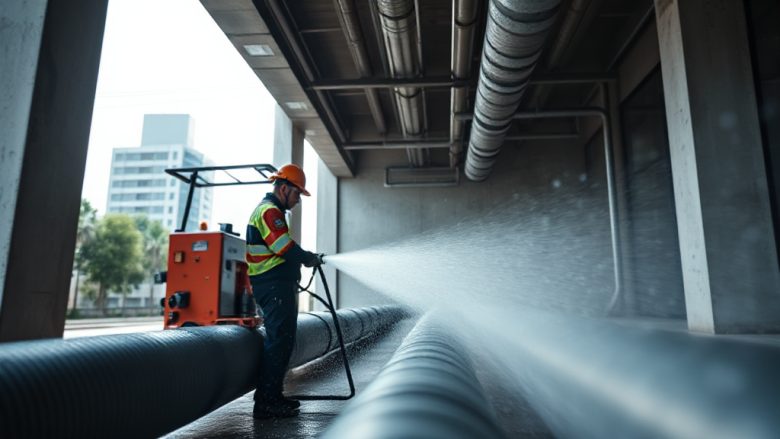
In the 25 de Março area, the hidrojateamento truck is the workhorse for commercial lines. High-pressure water scours the pipe wall instead of just punching a hole through the blockage. That matters because a punched hole closes again within weeks, while a scoured line stays clear longer.
For older buildings, the technician should check pipe condition before using aggressive pressure. Clay and cast-iron lines in this district can be decades old. A practitioner asks about pipe material before authorizing the jetter.
When camera inspection is worth the extra time
If the same line blocks twice in a season, stop clearing and start inspecting. A camera shows roots, collapsed sections, grease buildup and illegal connections. That information turns a guessing game into a repair plan. For síndicos managing shared laterals, the camera report is also the document that justifies a building-wide maintenance decision.
Emergency Versus Preventive: The Trade-Off Experienced Users Understand
An emergency call at midnight costs more than a scheduled visit on a Tuesday morning. That is not a secret. What experienced users understand is that the real cost of an emergency is not the call fee — it is the closed shop, the ruined stock and the staff overtime. Preventive maintenance is cheaper because it moves the work to a controlled moment.
A preventive routine for a commercial property in this district looks like this:
- Monthly enzyme treatment on kitchen and food-prep lines.
- Quarterly mechanical clearing of floor drains in high-traffic areas.
- Annual camera inspection of the main lateral in older buildings.
- Grease trap cleaning on the schedule the trap actually needs, not the one on the wall poster.
A desentupidora 25 de Março that offers 24-hour emergency service is not there to replace prevention. It is there for the failures prevention cannot cover: a sudden collapse, a root intrusion or a shared-line blockage caused by a neighbor. The experienced move is to use both.
How to decide between an emergency call and a scheduled visit
Call immediately if water is rising, if sewage is entering a public area, or if the blockage affects multiple units. Schedule a visit if the drain is slow but stable and no water is backing up. In a commercial building, the síndico or manager should make that call, not an individual tenant, because shared lines require shared authorization.
Practical Closing Action: Build Your One-Page Drain Plan
Before the next blockage, write a single page and keep it where staff can find it. Include the property address, the cleanout location, the fixtures on each line, the name of the building manager, and the number of a trusted drainage service. Add a note on which fixtures to stop using first and where the water shutoff is.
That page takes twenty minutes to prepare and saves hours during an emergency. It also gives the technician the information needed to arrive with the right equipment. In a district as dense and commercial as 25 de Março, preparation is the difference between a routine clearing and a lost business day.
Frequently Asked Questions
How quickly can a desentupidora reach 25 de Março in an emergency?
Response time depends on traffic and the time of day, but a local emergency service based in São Paulo can typically reach the district faster than a company coming from the outskirts. Clear information at the time of the call is the biggest factor in reducing arrival time.
Does a commercial store need a different service than a residential apartment?
Yes. Commercial lines carry grease, lint and higher volume, so they usually need hidrojateamento rather than a simple snake. Residential lines are more often blocked by hygiene products, food waste or roots. The diagnosis method is similar, but the equipment differs.
Can I clear a blocked drain myself before calling a professional?
You can remove a surface blockage at a trap, but avoid pouring caustic chemicals into a line that is fully blocked. The chemical sits in the pipe, can damage older materials and creates a hazard for the technician. Mechanical clearing is safer and more effective.
What should I have ready when the technician arrives?
Clear access to the cleanout, a description of which fixtures are affected, and permission to work if the line is shared. In commercial buildings, the manager or síndico should be present or reachable by phone to authorize work on shared laterals.